
Your first weeks on the mat
You don't need to be fit, young or brave. You need shorts, a t-shirt and a club nearby. The rest is below.
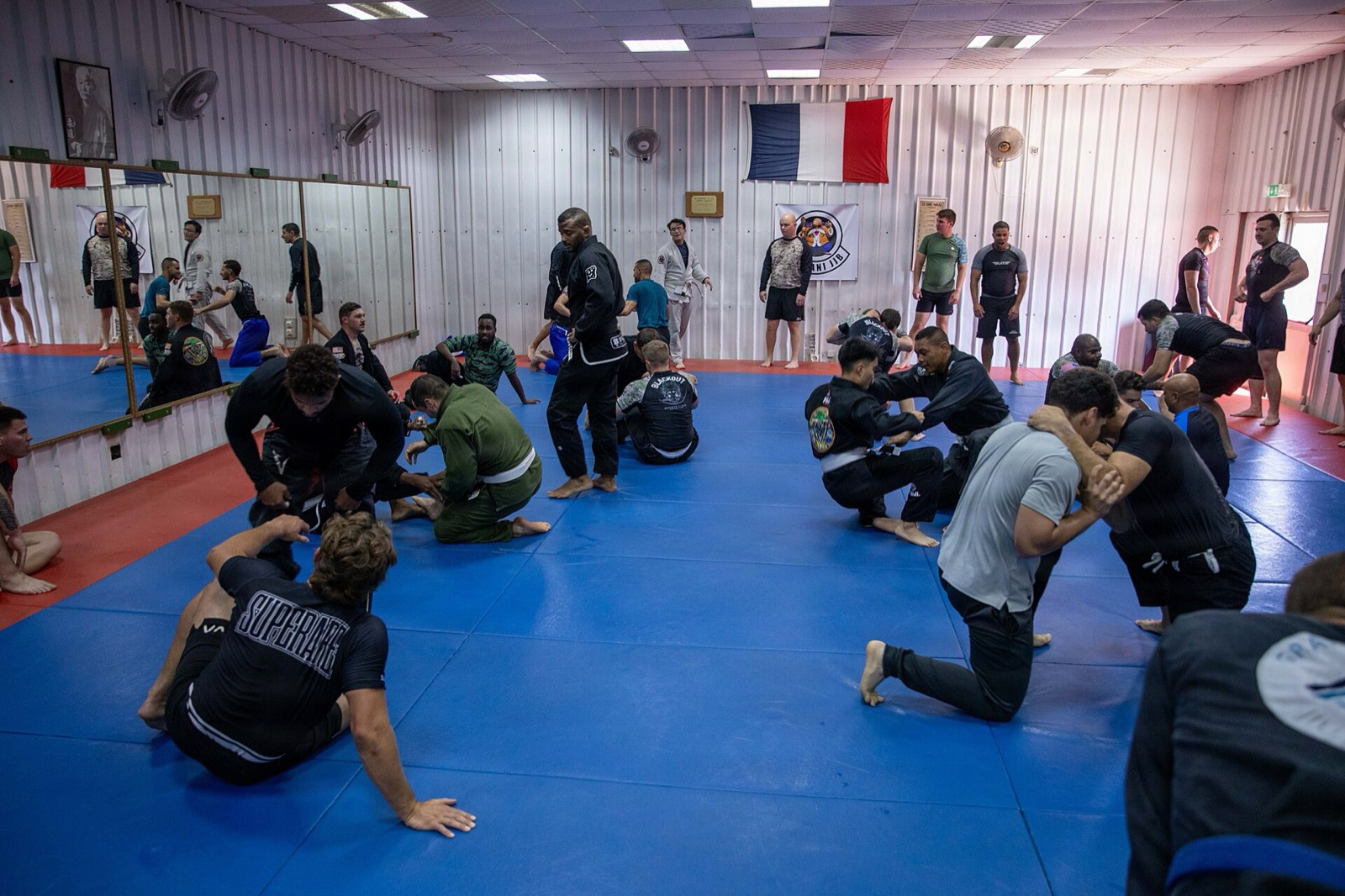
Before you go
Almost every Norwegian club has a free trial class, and most run a beginners' course a couple of times a year. You don't need to be fit. You don't need to be young. You don't need to know anything at all. Send a message on Instagram or an email asking when to come, and that is you started.
What to bring
For the first class: shorts with no pockets or zips, a tight t-shirt or rash guard, a bottle of water, and sandals or shoes to wear off the mat. The club lends you a uniform. Buy your own once you know you are going to keep at it, not before.
And cut your nails, fingers and toes. It is the cheapest way a beginner has of making themselves popular.
Kit, sport by sport
Grappling (BJJ, judo, wrestling, submission wrestling): a uniform, or shorts and a rash guard. Nothing beyond that. Judo and BJJ clubs lend uniforms for trial classes, and one you buy yourself will last years.
Striking (Muay Thai, kickboxing, boxing): the club lends gloves for the first few sessions. Get your own hand wraps or inner gloves straight away. They cost very little, and you avoid sweating into someone else's. Shin guards and a mouthguard can wait until you start sparring.
Karate and taekwondo: turn up in ordinary training clothes the first time. You buy the uniform through the club when you join, and it usually costs between 400 and 800 kroner.
The first class
A normal class runs an hour and a half: warm-up, a technique shown in pairs, drilling, and sparring at the end. «Rolling», most people call it. As a beginner you usually get to choose whether to join in or watch. Say it is your first time and you will be put with an experienced partner who looks after you. That is how nearly every club does it.
Tapping is not losing. Two taps on your partner or on the mat, they let go immediately, and you start again. Beginners tap ten times a session. So do black belts.
What it costs
Norwegian clubs mostly sit between 400 and 900 kroner a month, and most give a discount to students, juniors and anyone signing up for a full term. Many clubs are sports associations, which means a membership fee on top of the training fee. A gi costs from around 800 kroner and lasts for years.
Unwritten rules
Shower before training, and wash your gi after every session. Cover any open cuts. If you have a fever, a cold or anything itchy, stay at home. Skin infections travel fast in a sport where everybody touches everybody. Never walk onto the mat in shoes, and never walk off it without them.
Let go the second your partner taps. Go easier on people who are newer, smaller or older than you. And if you are unsure whether you know something, ask. Everyone on that mat has stood exactly where you are standing.
The belt system
BJJ has five adult belts and four stripes on each. Most people spend ten years or more getting from white to black. That is not a flaw in the system. That is the system.